Heritage Appleton Concrete and MasonryHeritage Appleton Concrete and Masonry

Brick pointing in Appleton WI - tight joints that keep water out of your brick

Crumbling or cracked mortar between your bricks lets water in. We cut out the worn joints and refill them with mortar that suits your wall.

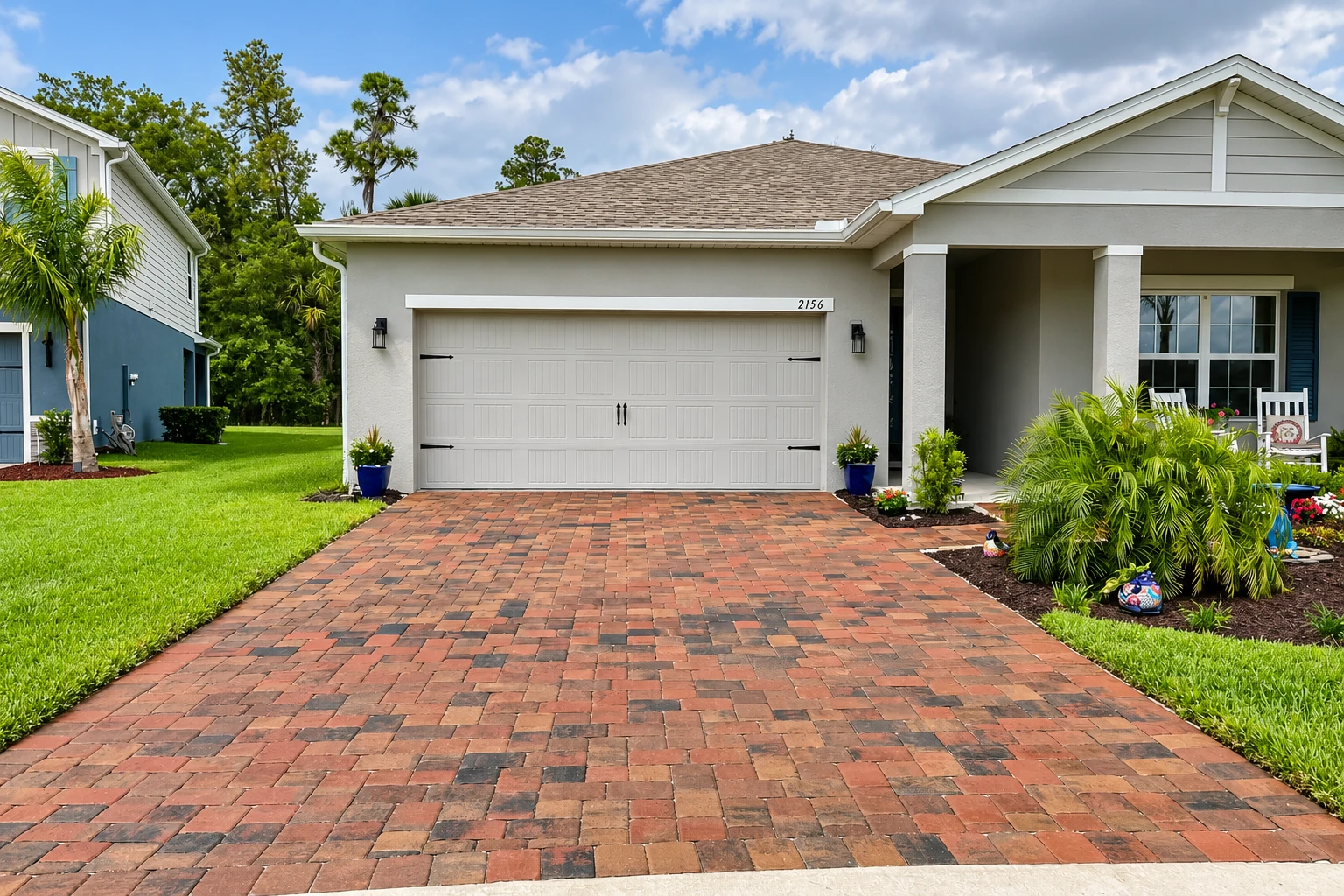
A red and brown brick-paver driveway leads to the garage of a light-colored house.

Brick pointing in Appleton, WI means cutting worn or cracked mortar out of the joints between your bricks to an even depth and packing in fresh mortar, which is one of the best ways to keep water out of a brick wall.

When does brick need pointing, and what does it take?

Most people call us after they notice mortar crumbling out of the joints, sand collecting along the base of a wall, or joints that have sunk back behind the face of the brick. In most of those cases the bricks themselves are fine. It's the mortar between them that has worn out, and renewing it before water gets in behind the brick keeps a small repair from turning into a larger one.

The price turns on how much of the wall needs work, how deep the wear goes, how carefully the old mortar has to come out around the brick, and height, because walls tall enough to need scaffolding cost more per square foot to point. The schedule turns mostly on the weather and on whether the city wants a permit for your job. The estimate I write at your house gives you your own figure.

What a good pointing job depends on

A pointing job looks simple from the sidewalk, but a few things decide whether the new joints last. Each one is worth asking any crew about, ours included.

An even depth of cut

Proper repointing starts with removing the old mortar to a uniform depth, or back to sound mortar, so the new joint is packed into a clean, consistent pocket. A shallow or uneven cut leaves thin patches that tend to loosen first, so it's fair to ask a crew how they keep the depth even across the wall.

Pointing is its own skill

Repointing should be done by people experienced in it, and an excellent mason isn't automatically qualified for it. Laying new brick and cutting out old joints without chipping the edges are different skills, so ask about a crew's pointing work in particular and where you can see some of it.

Finding where the water comes from

Joints that wear out in one spot usually have a reason, such as a downspout that dumps water against the wall or a gutter that overflows above it. If that water keeps coming, new mortar there wears out early too, so I look for the cause and tell you about it, even when it isn't masonry.

What happens after you call about brick pointing

Here's how a pointing job goes with us, from the first call to the last look at the finished wall, and who you'll be dealing with at each stage.

  1. 1

    Call or send a message

    Call (920) 454-9038 or fill in the form on this page and tell us what you've noticed on the wall. We get back to you to set a time for me to come out and look.

  2. 2

    Walk the wall together

    I look at the joints with you, check the brick and the old mortar, and look for what's causing the wear. Then I write up an estimate that explains what we'd do and why.

  3. 3

    We prepare and do the work

    If you'd like to go ahead, we take care of any permit the job needs. Our crew then sets up at the wall, cuts out the worn joints and packs in new mortar.

  4. 4

    Look over the finished job

    Before we leave, I go over the finished wall with you, we clean up the dust and mortar crumbs around the house, and I tell you anything on that wall worth watching over the years.

Request an estimate

How we do brick pointing on your house

We cut the worn joints out to an even depth across the wall, so every joint gets the same solid bed of new mortar instead of a thin skim that lets go. Then we pick a mortar that suits both your brick and the mortar already in the wall, because new joints should work with what's there rather than fight it.

On older homes, I look closely at how soft the brick is before we decide how the old mortar comes out. Soft brick chips and rounds over at the edges easily, and that damage shows for the life of the wall. Whether your house calls for the gentler approach is something I decide standing at the wall, not over the phone.

Pointing often turns up other work. Chimneys take more weather than any other part of the house, so if the chimney's joints are going too, chimney repair may belong in the plan. And if cracked joints run in a stair-step line along a basement wall, the mortar may be the symptom rather than the problem, and I'll tell you if foundation repair should come before pointing.

Hand chisels or a grinder

On soft, older brick, hand chisels and mash hammers are slower but usually the least likely to cause damage. Grinders are faster, and in unskilled hands they can ruin soft brick. I choose once I've seen how soft yours is.

Spot pointing or the whole wall

If the wear sits in one area, such as under a leaking gutter, pointing just that area is usually the sensible job. When joints are failing across a wall, doing it all at once gives an even look and one repair instead of several.

Get a written brick pointing estimate for your wall

Send the form and we'll reply within one business day to set a time for me to come out. The estimate is free and done in person at your house, and there's no obligation to go ahead. I'll write down what we'd do on your wall and why, so you can decide in your own time.

(920) 454-9038

hi@appletonconcreteandmasonry.com

Brick pointing and other masonry work around Appleton

In Appleton, building permits come from the City of Appleton Inspection Division. Whether a pointing job needs one is the city's call, so we check with them before work starts, and if your job does need one, we pull it ourselves and keep the paperwork in order. If you'd like to ask the city yourself, that's the office to contact.

For one- and two-family homes, Wisconsin's Dwelling Contractor certification is what the owner of a contracting business holds to pull building permits, and the state requires that contractor to carry either a surety bond or general liability insurance. When you're comparing crews, it's reasonable to ask who will pull the permit and how they meet that requirement.

Around Appleton, many of our calls are about older brick homes, chimneys and foundation walls where the joints have crumbled while the brick has held up. We do the same pointing work in Grand Chute, Neenah and the other cities nearby, with the same care over the mortar and how the old joints come out.

Why Appleton homeowners call Heritage Appleton Concrete and Masonry for pointing

I learned masonry working under experienced masons around Appleton and started this business in 2013, and careful mortar work on older brick and stone homes is what we're best known for. I come out to look at your wall myself and write the estimate, and our crew of experienced masons does the work while I check it as it goes.

We're licensed and fully insured. Our promise is satisfaction guaranteed. I'd rather point to the actual joints that need work and do a smaller job well than sell you more than your house needs. If you've noticed crumbling joints, call (920) 454-9038 or send us a message, and I'll come take a look.

Chimney repair

Chimneys stand in the weather on every side, so their joints and crowns often wear sooner than the walls below and can let water into the house.

Foundation repair

When cracks step through the mortar of a basement or foundation wall, the wall may have moved, and that needs fixing before new mortar will hold.

Cities where we point brick

We're based in Appleton, WI and do brick pointing in the cities around it, including Grand Chute, Neenah, Menasha, Kaukauna and Oshkosh, along with many others nearby.

Questions about brick pointing in Appleton

How much does brick pointing cost in Appleton?

Repointing brick across the US usually costs about $3 to $25 per square foot of wall, for removing the worn mortar and filling the joints with new. Where your wall falls in that range depends on its size, its height and how much wear there is, and the estimate I write at your house gives you your own figure.

How do I know if my brick needs repointing?

Your brick needs repointing if you see crumbling mortar, gaps or voids in the joints, hairline cracks in the mortar, cracks between the brick and the mortar, or mortar worn back more than a quarter inch from the face. You can check your walls for these signs yourself before you ask for an estimate.

What kind of mortar should be used to repoint an older brick house?

The new mortar should be equal to or weaker than the original, because stronger mortar puts stress where brick meets mortar and can permanently damage the brick face. The weakest kinds are generally kept for historic masonry. Before you hire, ask any crew how its new mortar compares with what's already in your wall.

How long does new mortar last on a brick house?

Mortar joints typically last more than 25 years, depending on exposure and materials, while the bricks themselves may last well over 100 years. That means the joints, not the bricks, are usually what needs renewing, so pointing a sound old wall is normal upkeep rather than a sign the wall is failing.

Can brick pointing be done in cold weather in Wisconsin?

It can, but typical masonry practices apply between 40°F and 100°F, and work below 40°F calls for cold weather requirements. If you're planning work for the cooler months, ask how the crew will meet those requirements. We talk through timing with you when we set the schedule.

How do I get my house ready for brick pointing?

Move patio furniture, grills, planters and vehicles away from the wall, and trim back any shrubs so the crew can reach the joints. Cutting out old mortar raises dust, so keep the windows on that side of the house closed while we're working.

Send photos of your worn joints

Call (920) 454-9038 or use the form with a few photos of the worn or cracked joints and the wall's rough size and height, so I know what I'm coming to see before I arrive.

(920) 454-9038Request an estimate