Heritage Appleton Concrete and MasonryHeritage Appleton Concrete and Masonry

Walkway construction in Appleton WI - a firm walk that handles freeze and thaw

Cracked, heaved or slippery front walk? We build paver and concrete walkways on a packed base, so you have firm footing to your door.

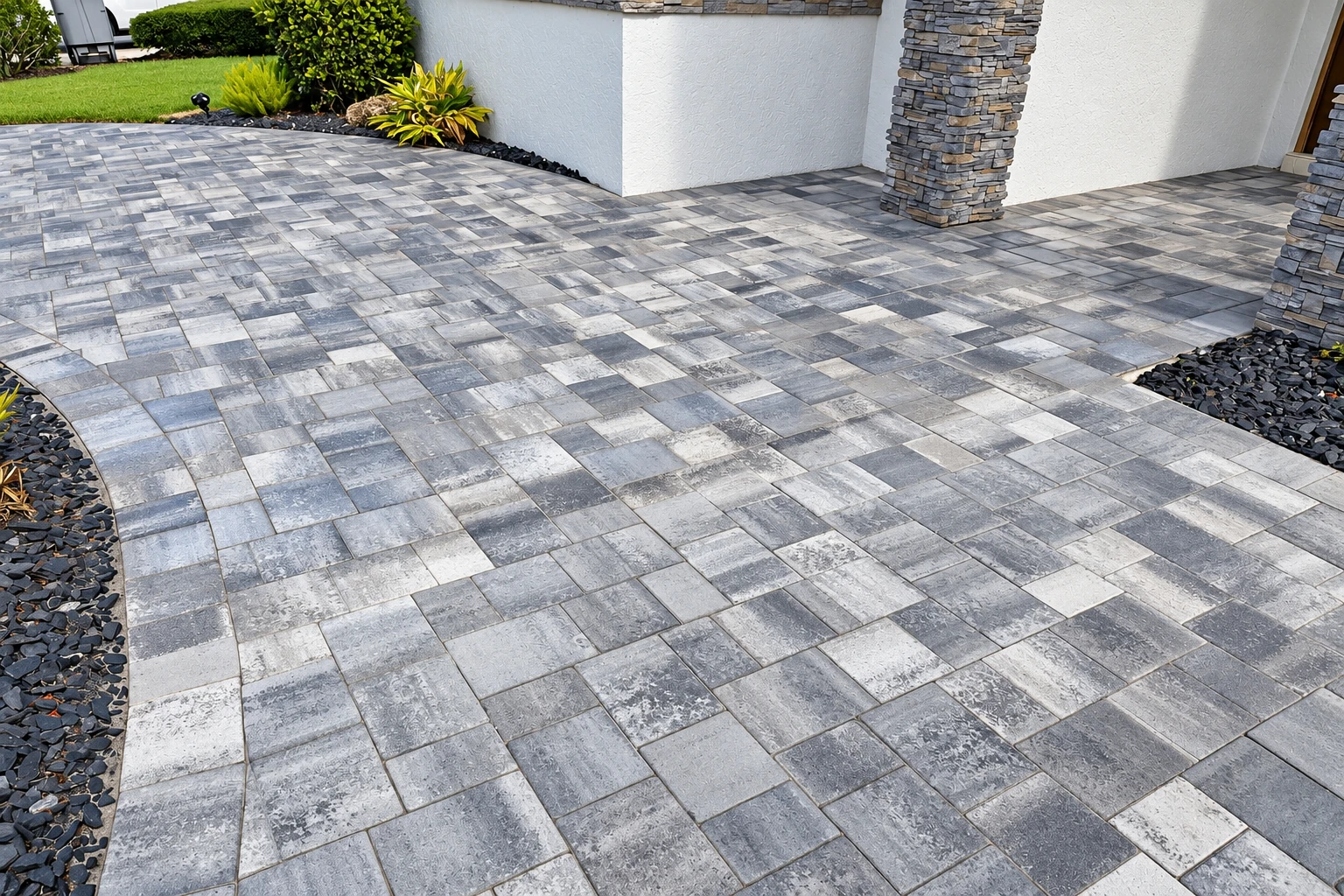
Gray rectangular pavers form a broad walkway beside a white house, bordered by dark stones and green shrubs.

Walkway construction in Appleton, WI means digging out the route, packing a firm base and topping it with concrete pavers or poured concrete, so you have a solid, even surface from the driveway or street to your door.

What does it take to build a new walkway in Appleton?

Most calls about a walk start with something you can see. A concrete walk has cracked or tipped up at a joint, a few pavers have sunk and now hold water, or a muddy path has worn across the lawn where a walk should be. The first decision is the material, pavers or poured concrete, and I'd rather settle that by how you use the walk than by what's easiest to sell.

The price moves with the size of the walk, the material you choose, whether poured concrete is plain or has decorative color or texture, and how much old walk has to come out first. The schedule turns mostly on the ground, because the base has to go down on thawed soil. When I come out, I look at the route in person and write down what we'd do and why, so you see your own figure.

What decides how your walkway holds up

Pavers and poured concrete both make a good walk. The differences show up on a wet morning, after a few winters of salt, and in the base you never see.

Footing on wet days

Concrete gives a smoother surface but can get slippery when wet, while pavers grip better but may feel a little bumpier, depending on the paver. If anyone in your house is unsteady on wet days, I'd lean toward the traction of pavers. If you push a stroller or wheelbarrow along it, smooth concrete may suit you better.

Winter salt on the walk

Concrete pavers stand up to de-icing salt better than conventional paving, because they're strong and dense and soak up very little water. If you salt your front walk through every winter, that's a real point in favor of pavers, and it's worth telling me about when we talk through materials.

A base that fits the yard

The packed base under the walk does most of the work. Paver guidance says how deep it should be depends on foot traffic, soil type, drainage, moisture and climate. So when I walk your route, I look at where water runs and sits, and the estimate explains how we'd build the base and why.

What happens when you call us about a walkway in Appleton?

From the first call to the finished walk, you'll know who is coming out, what we found and what we plan to do before any digging starts.

  1. 1

    Call or send a message

    You can call (920) 454-9038 any day from 6 AM to 11 PM, or use our contact form. We get back to you to set a time for me to come and look at the route.

  2. 2

    Walk the route with me

    I walk the job with you, look at how the old walk failed or where the path wears, and ask how you use it. Then I write an estimate that explains what we'd do and why.

  3. 3

    We prepare and build

    If you'd like to go ahead, we take care of any permit the job needs. Our crew then digs out the route, packs the base, and lays the pavers or pours and finishes the concrete.

  4. 4

    Go over the finished walk

    Before we leave, I go over the finished walk with you and our crew cleans up the work area. I'll also point out anything worth keeping an eye on as the seasons change.

Request an estimate

How we handle walkway construction from start to finish

We start by helping you weigh pavers against poured concrete for how your walk gets used and how sure your footing feels when it's wet. Once you've chosen, our crew digs out the route and packs the base, then lays the pavers or pours and finishes the concrete. We clean up as we go, so your yard is usable again when we leave.

Paver walks get a fixed edge along both sides, because pavers without a border can spread outward and open their joints. Paver guidance also calls for an edge restraint wherever the paving changes to another material. For concrete, we ask for a mix made to stand up to freezing. Highway paving guidance explains that tiny air bubbles spread evenly through concrete leave room to relieve pressure as it freezes.

A walk often meets other masonry on its way to the door. If you'd like it to run beside a garden wall or tie into the house, we also handle brick wall installation and stone masonry, and I'll plan the walk so the materials suit each other and the house they lead to.

Straight or curved route

A straight walk is the simpler build and the most direct line to the door. A gentle curve can suit a yard or planting bed better, though pavers along a curve need more cutting, which adds labor.

One material or a border

Some homeowners like a contrasting paver border along the walk to tie it to the brick or stone of the house. A single material keeps the job simpler, and I'll show you in the estimate how either would look and meet.

Get a written walkway estimate for your route

Send us a message and we'll reply within one business day to set a time for me to come out. The estimate is free and done at your home, and I write down what we'd do and why. There's no obligation to go ahead.

(920) 454-9038

hi@appletonconcreteandmasonry.com

Permits, contractor rules and walkway work in Appleton

Before a walk goes in, the permit question has to be settled with the local office. In Appleton that's the City of Appleton Inspection Division, which handles city building permits at 100 North Appleton Street and takes calls at (920) 832-6411. Whether your walkway needs a permit is up to the division, so we check with them before work starts, and when one is needed, we pull it ourselves and keep the paperwork in order.

Wisconsin also grants a Dwelling Contractor credential to contracting businesses that obtain building permits for one- and two-family homes. It's held by the owner, a partner or the chief executive of the business, and the state requires either a bond of at least $25,000 or general liability insurance of at least $250,000 per occurrence. You're entitled to ask any contractor who at the company holds it.

We're based in Appleton and do the same work in the cities around it, including Grand Chute and Neenah. Many of the homes we work on here are older brick and stone houses, and on those I care as much that the walk suits the house as that it's solid underfoot.

Why Appleton homeowners call Heritage Appleton Concrete and Masonry for walkways

I left an office job because I wanted to build things that would still be standing long after I'd finished, and I learned masonry working under experienced masons around Appleton. We've been in business since 2013. I come out to look at your walk myself and write the estimate, so the person you talk to is the person who answers for the plan.

Our crew of experienced masons does the work, and I check it as it goes. We're licensed and fully insured. If a few sunken pavers can be lifted and reset instead of replacing the whole walk, I'll tell you so, because a smaller job done well is better than more than the house needs. Our promise to you is satisfaction guaranteed.

If you're ready to talk about your walk, please call (920) 454-9038 or send us a message. Thank you for considering us.

Brick wall installation

When your new walk runs beside a garden bed or along a property line, a low brick wall can hold back soil and frame the path neatly.

Stone masonry

Stone steps, a stone border or a short stone wall near the door can carry the character of an older stone house down to the walk.

Cities where we build walkways

We're based in Appleton and build walkways in the cities around it. The cities below have their own page, and we work in many others nearby, so please ask if yours isn't listed.

Walkway questions from Appleton homeowners

How much does a new walkway cost in Appleton?

Poured concrete or installed paver paving across the US usually costs about $6 to $30 per square foot, according to one national cost guide. That's a figure for paving in general, not our price. Your own figure comes from the written estimate after I've looked at your route, its size and the material you'd like.

Do pavers or concrete hold up better to freeze and thaw in Wisconsin?

Pavers usually hold up better, according to one cost guide, which says they typically come through freeze-thaw cycles without cracking while concrete cracks more easily from extreme temperatures or ground shifting. A single damaged paver can also be replaced, which is cheaper and easier than repairing a concrete surface. If you prefer concrete, the freeze-resistant mix we ask for helps.

When is the best time to build a walkway in Appleton?

The best time is once the ground has thawed. Paver guidance says frozen base material shouldn't go down and nothing should be placed over frozen soil, so we plan the work around that. If you call during the colder months, I can still come out and write the estimate so you're ready when the ground allows.

How soon can I walk on a new paver walkway?

You can walk on a paver walkway as soon as the paving is finished, because concrete pavers need no time to cure. Poured concrete is different, since it has to cure before it's ready for use. If you need the walk back right away, that's worth weighing when you choose a material.

What should I have ready before a walkway estimate?

It helps to have a rough length and width for the walk, the material you're leaning toward and a few photos of the route. With those, I can come out prepared to talk through the details. You can send them through our contact form or mention them when you call (920) 454-9038.

Talk through your new walkway with us

A short call to (920) 454-9038 lets me hear how you use your walk, and that is where the choice between pavers and concrete really starts.

(920) 454-9038Request an estimate