Heritage Appleton Concrete and MasonryHeritage Appleton Concrete and Masonry

Foundation repair in Appleton, WI - a house that sits steady on its footings

Cracks in the basement wall, or a wall that has started to bow? We find what's moving it and repair it to suit your house.

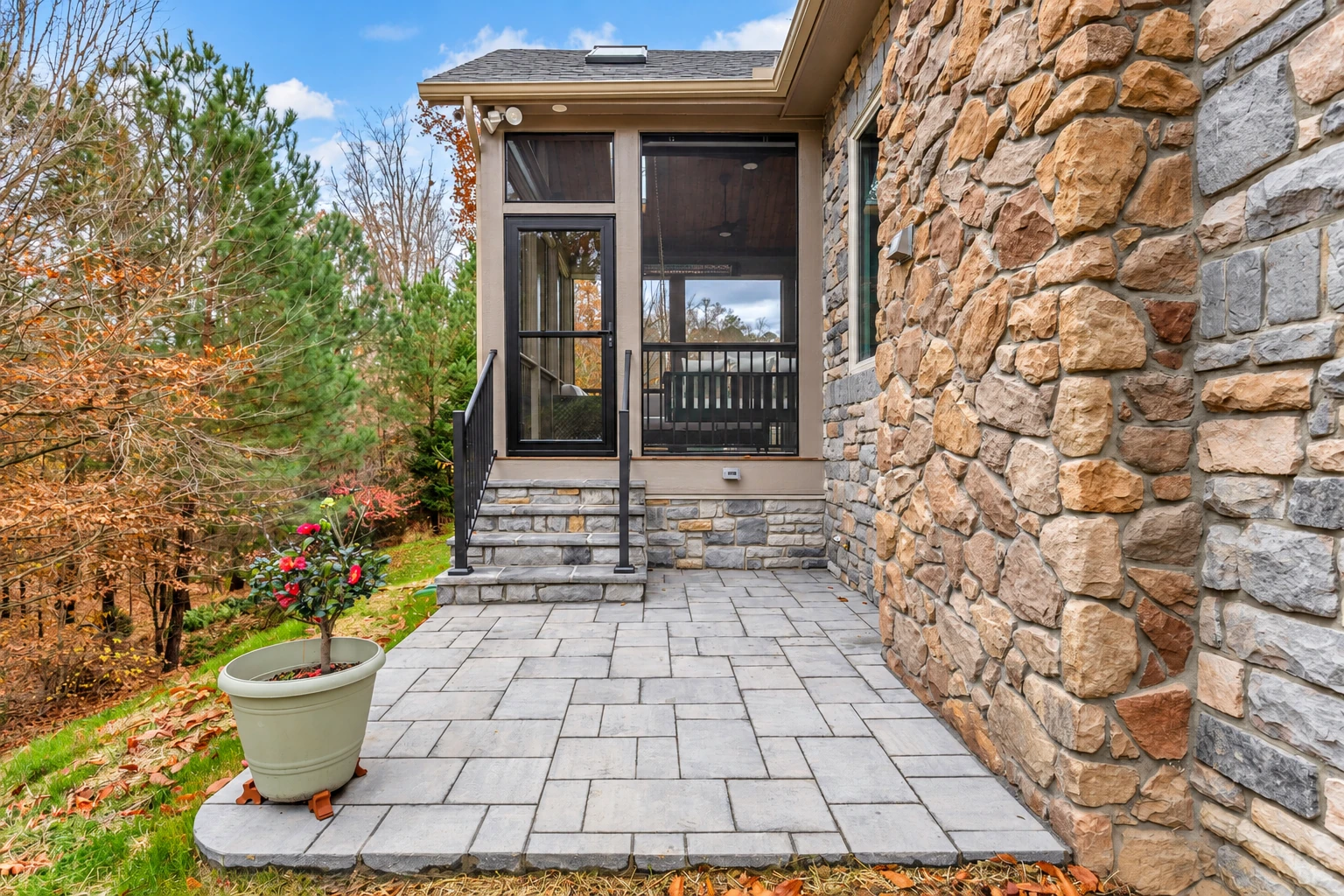
Stone-clad exterior wall borders a paved patio leading to a screened porch and short steps.

Foundation repair in Appleton, WI steadies a house that is moving, either with piers set into the ground under the footing or with supports for a basement wall, so the wall holds where it is or comes back toward where it started.

Does the crack in my basement wall need fixing?

Most people call us after spotting a crack in the basement, a wall that seems to lean in, or a door upstairs that has started to stick. Plenty of cracks are only the concrete shrinking as it cured and need nothing at all. Others mean the house is still moving. I'd rather tell you which one you have than sell you a repair your house doesn't need.

The price depends on what it takes to hold your house still, such as how many piers go in, how much wall needs bracing, how easy the footing is to reach and whether an engineer's design comes first. The schedule depends on that engineer's visit, the city permit, which we pull ourselves, and the ground, because frozen or soaked soil is slow to dig. After I've seen the job, I'll write up an estimate that explains what we'd do and why.

What we look at on a cracked foundation

A crack is where the trouble shows, but the cause is usually somewhere else. These are the things I check before suggesting any repair.

Which way the crack runs

The direction of a crack tells me more than its length. A thin, straight vertical crack is usually the concrete settling into itself. A stair-step crack through block joints or a long horizontal one points to pressure pushing on the wall, and that calls for a different repair.

Walls that have moved

A wall that leans in, bows in the middle or has slid at the bottom matters more than any single crack in it. I check the wall against a straight line and look upstairs for sticking doors and gaps at trim, because those show how far the movement has carried.

Water against the wall

Downspouts that empty at the wall, ground that slopes toward the house and white mineral streaks on the block all tell me water is pressing on the foundation. Steadying the wall without dealing with that water fixes only half of the problem, so I point it out at the estimate.

What happens when you call us about a foundation in Appleton?

From your first call to the final walk-through, you'll know who is doing what and why. I handle the visit and the estimate myself, and our crew handles the work.

  1. 1

    Call or send a message

    Call (920) 454-9038 or send a message through our form and tell us what you're seeing. We'll get back to you and set a time for me to come out and look at the wall with you.

  2. 2

    Walk the job together

    I'll measure and photograph the cracks, check the walls for movement and look for what's causing it. Then I'll write up an estimate that explains what we'd do, why it suits your house, and anything an engineer should see first.

  3. 3

    Permit, then the work

    If you'd like to go ahead, we apply for the city permit and wait for its approval before any digging starts. Our crew of experienced masons does the work, and I check on it as it goes.

  4. 4

    Review the finished repair

    Before we leave, I'll go over the finished job with you and show you what we did. Keeping your gutters clear and your downspouts carrying water away from the house will help the repaired walls stay where we set them.

Request an estimate

How we approach foundation repair on your house

I start by measuring and photographing every crack and checking each wall for movement, so we have a clear record of where things stand. When a crack looks structural, I'll tell you plainly to have an engineer see it before we do anything, because their findings should decide the repair rather than my guess or anyone's sales pitch.

Your house decides the repair, so we'll explain why one kind of pier or wall support fits it better than another. Movement below often shows up higher on the house as well, in step cracks through brick or a chimney pulling away. Once the foundation is steady, we can take care of chimney repair or tuckpointing on the same house.

Mark it and watch it

For a narrow crack with no sign of movement, you can mark both ends with the date and check it again after the next season. If it hasn't grown, it may never need more than sealing.

Repair it now

When a wall has already moved or a crack keeps widening, waiting usually means a larger repair later. In that case I'd recommend steadying the wall now and dealing with the water pushing on it at the same time.

Get a written plan for your foundation

Thank you for reaching out. We respond within 1 business day to set a time for a free in-person estimate, with no obligation. I'll come out, look at the walls with you and write down what we'd do and why.

(920) 454-9038

hi@appletonconcreteandmasonry.com

Foundation and masonry repair in Appleton, WI

The City of Appleton issues a Basement Foundation Repair Permit for this work, so for jobs inside the city we apply for it ourselves and keep the paperwork in order. The permit asks for the contractor's state Dwelling Contractor number, the certification Wisconsin requires before a business can pull permits on one- and two-family homes, and we call the city's Inspection Division when the job needs its inspection.

Across Northeast Wisconsin, winter frost heave, spring snowmelt, a high water table in wet seasons and clay-heavy soil all take turns pushing on footings and basement walls. That's why movement here usually comes and goes with the seasons instead of all at once. Around Appleton we see many older block and poured basements that have taken years of that cycle.

We're based in Appleton and do the same work in the cities around it, including Grand Chute and Neenah, along with many others nearby. Outside Appleton, the local office decides whether a permit is needed, so we check with them before work starts.

Why Appleton homeowners call Heritage Appleton Concrete and Masonry about their foundations

I learned masonry under experienced masons around Appleton and started this business in 2013, so we've been doing this work for 13 years. I come out to look at the job myself and write the estimate, and our crew of experienced masons does the work while I check it as it goes.

We're licensed and fully insured. Wisconsin requires a dwelling contractor to carry either a bond or general liability insurance, and it's fair to ask anyone you're thinking of hiring which one they have. Our work is satisfaction guaranteed. If you'd like me to look at your foundation, please call (920) 454-9038 or send us a message.

Chimney repair

When a foundation settles, the chimney can lean or crack along with it, and once the house below is steady, the chimney can be put right.

Tuckpointing

Movement below often leaves loose or crumbling mortar in the brick above, and new joints matched to your older brick close those gaps once the house stops shifting.

Cities near Appleton where we repair foundations

These are some of the cities around Appleton where we repair foundations and masonry. If yours isn't listed, please call and ask, because we work in many others nearby.

Questions about foundation repair in Appleton

Is my foundation crack serious?

On a poured wall, a hairline crack or a vertical crack less than 1/8 inch wide usually comes from the concrete shrinking as it cured, and it can be left alone unless it widens or leaks. A crack 1/8 inch or wider deserves a closer look. One engineering firm advises calling a structural engineer when a crack is wider than about 1/4 inch, especially a step or horizontal crack, or when the wall has visibly moved.

Should I use push piers or helical piers for my house?

The weight of your house usually decides it. One pier maker's guide says push piers suit heavier houses over dense soil the pier can reach, and helical piers suit lighter houses, mixed soils, sites with no bedrock within reach, and jobs where each pier's capacity has to be checked as it goes in.

How do you fix a bowing basement wall?

A wall that has already moved well inward may need wall anchors or tiebacks, which one carbon fiber supplier says are designed to pull it back toward where it was. Carbon fiber holds a wall where it is and stops it from moving further, but it doesn't straighten the wall.

How much does foundation repair cost in Appleton, WI?

Across the US, foundation pier installation usually costs about $1,000 to $3,000 per pier installed. That's a national figure for the market, not our price. Your cost depends on how many piers or wall supports your house needs and how hard the footing is to reach, and the estimate lays out what we'd do and why.

Do I need a permit for foundation repair in Appleton?

Yes. The City of Appleton issues a permit for basement foundation repair, and we apply for it ourselves. The permit isn't valid until the city emails back the approved copy, so you're welcome to ask to see that approval before we start.

How soon can foundation repair start after the estimate?

Work can usually start once the city has approved the permit and, if a crack calls for it, an engineer has seen the wall. The ground matters too, because digging along a footing is slower in frozen or soaked soil. I'll talk through the timing with you when I come out.

What should I do before a contractor looks at my foundation?

Take photos of each crack with a tape measure held across it, note roughly how wide each one is and whether it has grown, and check whether any wall bows inward. If water comes through, note when it happens. That gives me a good start when we walk the basement together.

Ask us to look at your foundation

We're open from 6 AM to 11 PM every day, so you can call (920) 454-9038 or use our form after work or on a weekend.

(920) 454-9038Request an estimate