
Foundation repair
When a crack shows up in a basement wall or a foundation corner settles, we find what's moving it first, then repair the block or concrete to suit.
Heritage Appleton Concrete and Masonry is a masonry contractor based in Appleton that works in Harrison, WI, repairing mortar joints, foundations and chimneys and building walls, walkways, paver driveways and fireplaces for homes across the village.
Heritage Appleton Concrete and Masonry handles masonry work in Harrison, from tuckpointing and brick repair to foundation and chimney work, retaining walls, walkways and paver driveways. Most calls start the same way, with a homeowner who has noticed a crumbling joint, a crack in the foundation or a chimney that needs attention.
Harrison borders Appleton and Menasha, so it's a short drive from where we're based. Many of the homes we see here sit in residential neighborhoods with a brick or stone front, a block or poured foundation and a yard with room for a walkway, patio or retaining wall. The calls run from a cracked basement wall to a driveway that's ready for pavers.
On older brick and stone, the work is usually about mortar, matching joints that have worn back without using a mix harder than the brick around it. On newer homes it's more often about building, with a base dug deep enough and drainage behind a wall so it holds its line. Either way, I'd rather fix what the house needs than sell it more.
When a crack shows up in a basement wall or a foundation corner settles, we find what's moving it first, then repair the block or concrete to suit.
For a chimney with loose bricks, a cracked crown or eroded joints above the roofline, we rebuild only what has failed and match the sound brick and mortar.
When the mortar joints on a brick front have worn back or gone soft, we grind them out and refill them with mortar matched to the brick, so the wall sheds water.
Spalled faces, cracked units or a few loose bricks by a step or garage door can be cut out and replaced one at a time, without redoing the whole wall.
A paver driveway lasts when the base under it is dug and packed right, so we build that first, then lay and lock the pavers to fit your lot.
Where a yard steps down or a slope pushes toward a patio, we build the retaining wall on a proper base with drainage behind it, so it can hold its line.
On older brick or stone that has been stained, cracked or patched over the years, we clean, repoint and repair it with materials that suit the original work.
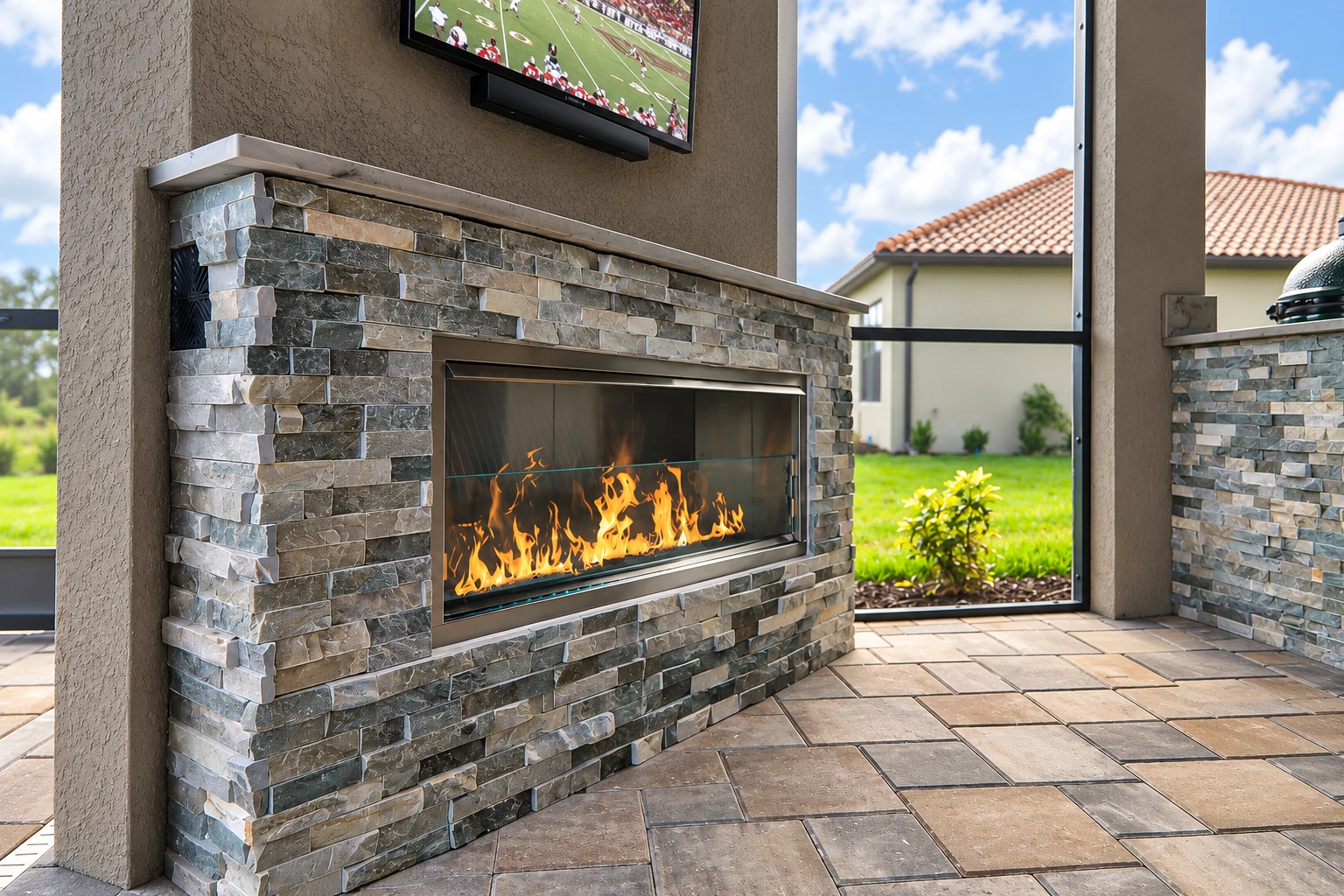
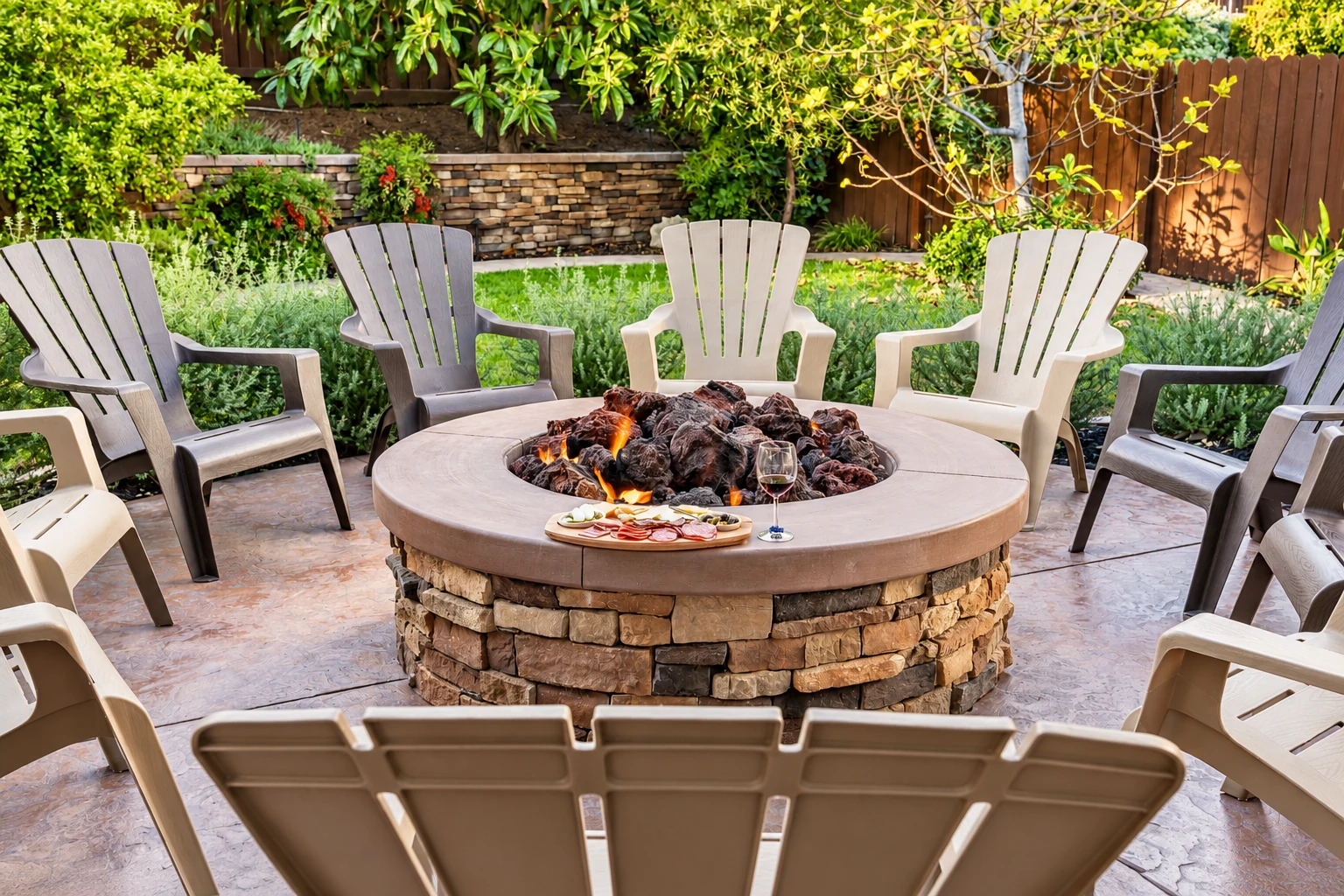
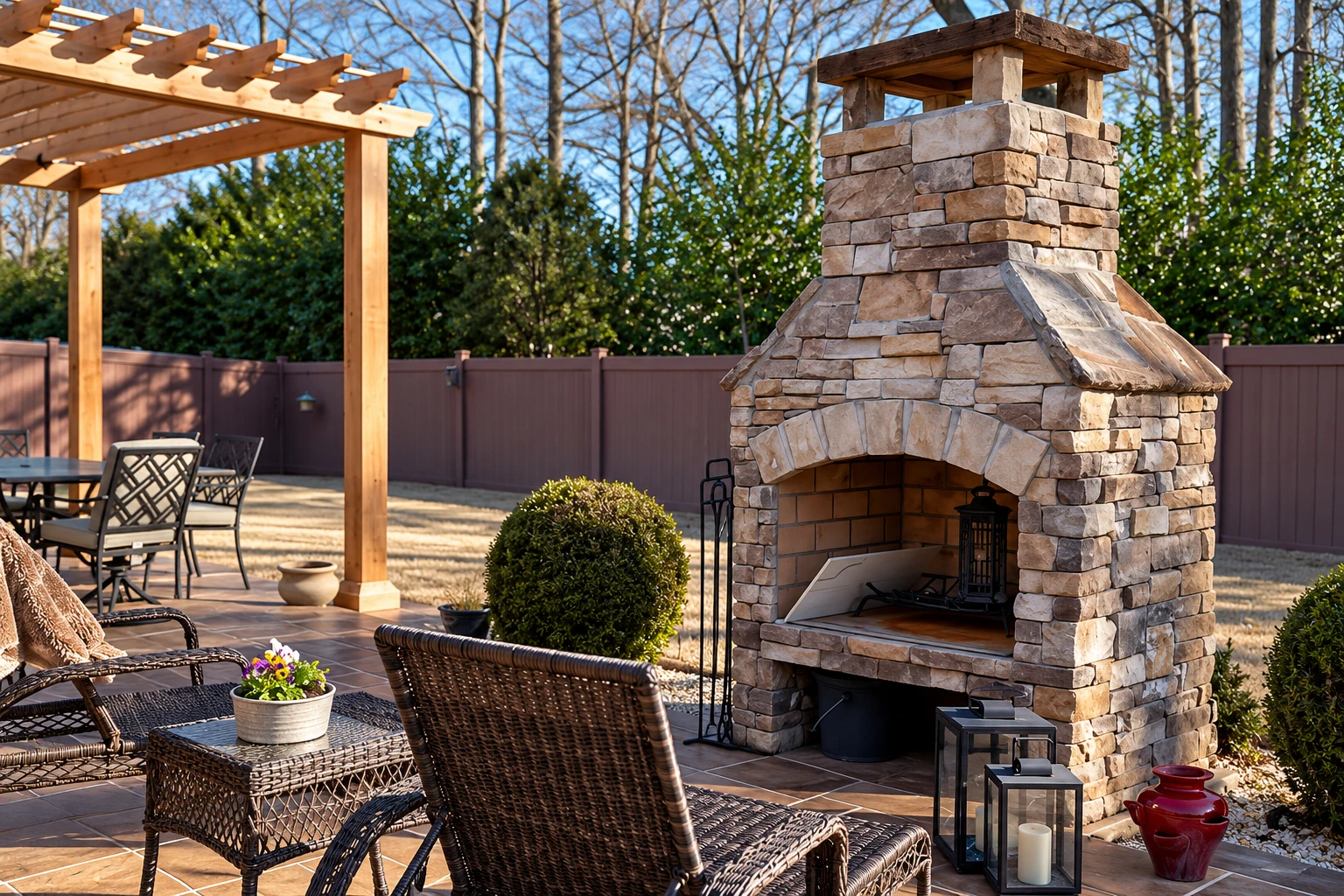
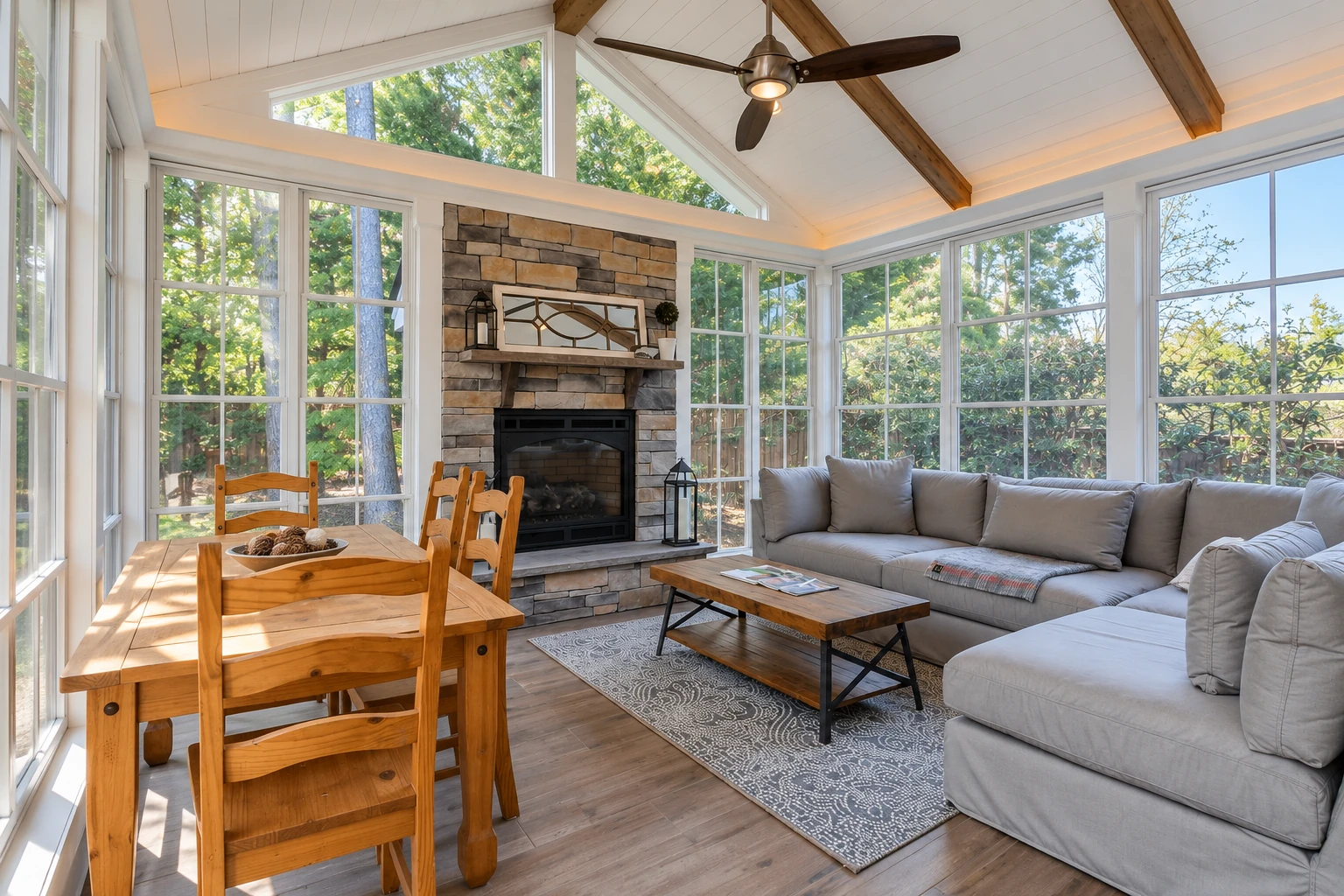
We build masonry fireplaces indoors and out, laying the firebox, hearth and surround to fit the room or patio and the way you plan to use it.
Stone veneer can dress up a foundation, a front porch or a fireplace wall, and we set it over a proper backing so moisture has a way out.
For garden walls, screening walls or a base for something heavier, we lay concrete block on a solid footing, with reinforcement where the wall needs it.
When a garage, addition or porch needs a new foundation, we lay the block walls true and level on the footing, ready for the framing that comes next.
Grill islands, counters and oven bases need a firm footing and heat-safe materials, and we build them to sit well beside the brick or stone already on your house.
A front walk that heaves or holds puddles usually has a base problem, so we dig it out, rebuild the base and lay brick, stone or pavers on top.
New brick walls, from a garden wall to a screen along a patio, are laid with a brick, pattern and mortar color chosen to look right beside your home.
For natural stone steps, walls and borders, we choose and fit each stone by hand, setting it in mortar or laying it dry depending on where it sits.
When only a section of joints is cracked or missing, such as under a window or beside a downspout, we point just those joints and match the mortar color.
We reply to every call and message within one business day. I'll set a time to come out to your Harrison home, look at the work in person and write down what we'd do and why. The estimate is free, and there's no obligation.
(920) 454-9038In Harrison, building permits come from the Village of Harrison's Building Inspector, and when a job needs one, the work waits until it's issued. The village's building permits page names roofing, siding and windows, not masonry, so I call the inspector at 920-989-1062 Ext. 110 about your job before we start. When a permit is needed, we pull it ourselves and keep the paperwork in order.
There are two things you can check on any contractor here. The state certifies who may get a building permit for a house, which we explain in the questions below, and the Village Clerk issues village business licenses at the Village Hall. Anyone selling services door to door in Harrison has to apply for a village permit, so it's fair to ask to see it.
The price of a job here moves with its size, how easy the wall or drive is to reach, whether old brick or stone has to be matched, and how much damage turns up once a joint or crack is opened. The schedule turns on the permit check, the materials and curing time. We do the same work in Greenville and Kaukauna, and your price comes from the estimate, where I write down what we'd do and why.
I left an office job because I wanted to build things that would still be standing long after I'd finished, and I learned masonry working under experienced masons around Appleton before starting this business in 2013. We're best known for careful mortar work on older brick and stone homes, and we bring the same care to new walls, walkways, driveways and fireplaces.
I come out to look at the job myself, point to the actual crack or joint, and write down what we'd do and why. Our crew of experienced masons does the work, and I check it as it goes. If a smaller repair is what your house needs, that's what I'll recommend, because the right mortar and the right base matter more than the size of the job.
We're licensed and fully insured, and our work is satisfaction guaranteed. If you'd like me to look at your house, please call (920) 454-9038 or send us a message. Thank you for considering us.
The village posts a good deal of guidance for home projects. Here's how the parts that touch masonry shape the way we plan a job in Harrison.
The village's zoning office offers brochures for home projects that explain whether a project needs a zoning or a building permit. They cover patios and driveways, fences, decks, additions, garages and sheds, and pools, and the Village Assistant Planner takes the questions they don't answer. For a paver driveway or a patio wall, we read the brochure with you before we plan the layout.
The village posts grading guidelines, and its zoning information places stormwater and erosion control for single- and two-family homes under the building permit. That matters when a new driveway, walkway or retaining wall changes how water leaves your yard. We confirm how that applies with the Building Inspector before we dig, because the base and the drainage are planned around it.
If the masonry is part of a larger project, such as a brick-faced addition or a remodel that adds a fireplace wall, the village posts a separate residential additions and remodel permit along with an impact fee schedule. We look at both with you early, so the paperwork and any fees are known before the job is priced rather than after.
The village's zoning office posts permit forms for demolition, grading and temporary structures, among others. When a job starts with removing an old block wall or a failed retaining wall, I ask the village whether any of those forms apply before the crew brings in a saw or a breaker, because finding out halfway through can stop the work.
The cost is set by the size of the job, how much damage sits behind the surface and the materials it needs, so I give each homeowner a written figure after seeing the work in person. Matching older brick or mortar, digging a deeper base for pavers or a wall, and tight access are the things that usually raise it.
In Wisconsin, only a contractor with a state Dwelling Contractor certification, or a restricted certification, can get a building permit for a one- or two-family home, and they must hold or employ a state-certified Dwelling Contractor Qualifier. A homeowner who lives in the house, or will, and applies for work on it is exempt. It's fair to ask any contractor about their certification.
A state-certified Dwelling Contractor must carry either a bond of at least $25,000 from a surety company authorized in Wisconsin or general liability insurance of at least $250,000 per occurrence. Ask to see that proof before any work starts. We're licensed and fully insured, and I'm glad to go over our coverage when I come out.
Yes, state guidance says a contractor must tell you about every required building or construction permit before you enter a home improvement contract. We check with the village about your job first, tell you what it needs before you sign, and pull any permit ourselves.
The official, effective flood insurance rate maps are at FEMA's Map Service Center. The FEMA floodplain layer on the state DNR's floodplain map site is for information only and isn't the official map. It's worth checking the official map before planning foundation or retaining wall work.
The schedule turns on whether the village needs a permit for your job, how soon the brick, stone or block arrives, and how long the mortar or concrete has to cure before the next step. I'll lay out the order of work at the estimate, and our crew doesn't rush a cure to finish sooner.
Clear a path for the crew and move cars, grills and planters away from the wall or drive we're working on. Tell us where water collects in your yard and where children or pets play, so we can plan where materials sit. For chimney or fireplace work, move furniture away from the hearth.
We're open seven days a week from 6 AM to 11 PM, so you can call (920) 454-9038 after work or on a weekend, or send the form whenever it suits you.