Heritage Appleton Concrete and MasonryHeritage Appleton Concrete and Masonry

Brick wall installation in Appleton WI - a wall that drains and stands firm

Planning a garden wall or brick on part of your house? We build it so water drains out and the wall stays sound.

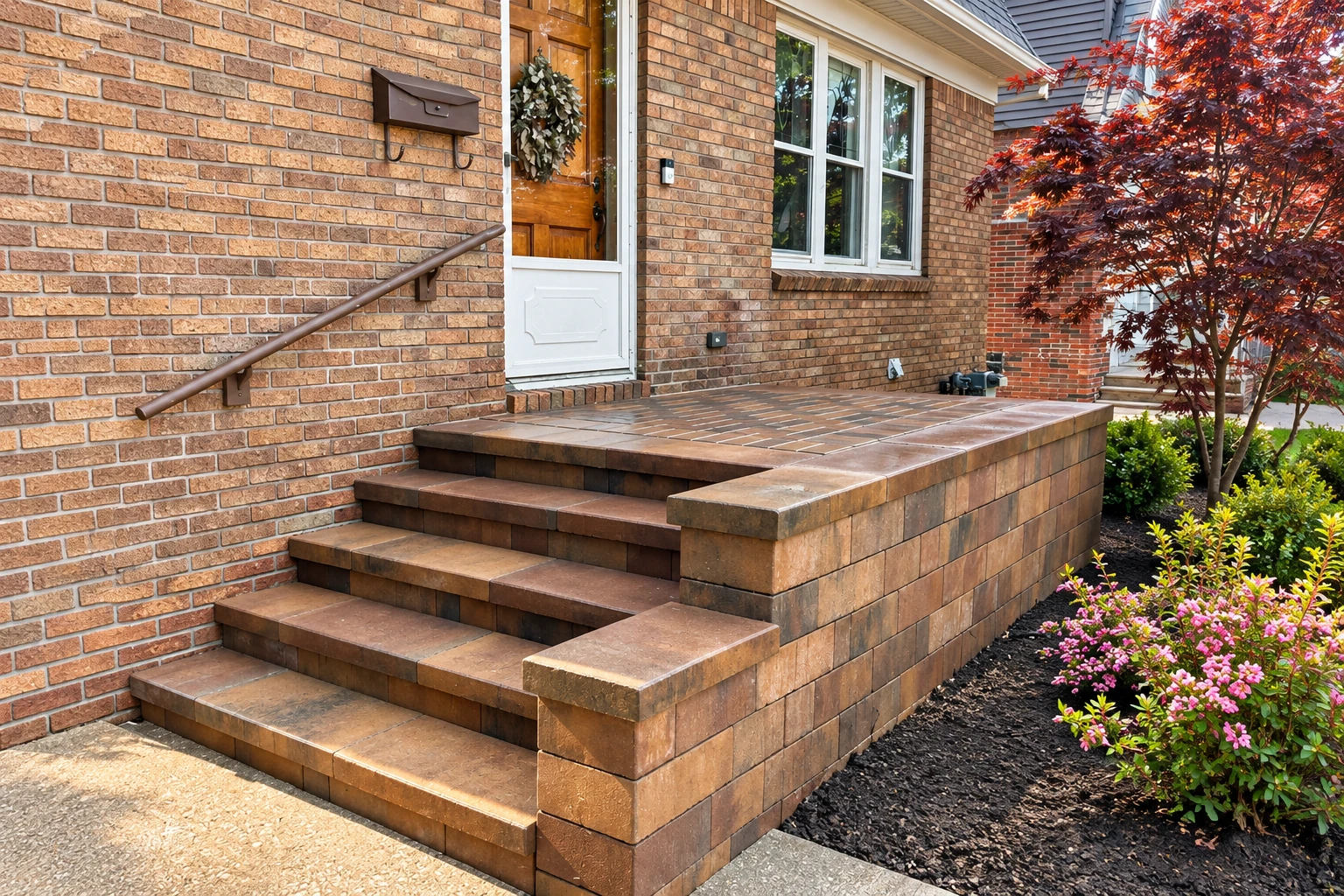
Broad brick steps and a raised matching retaining wall lead to the front entrance of a brick house.

Brick wall installation in Appleton covers freestanding brick walls in the yard and brick veneer, a single outer layer of brick on part of a house, built so water drains back out, the wall stands firm and the brick suits its spot.

What does it take to build a brick wall in Appleton?

Most people who call about a new brick wall already have a place in mind, along a patio, a property line or one side of the house, and a picture of how it should look. My first job is to work out what the wall has to do there, because a wall standing in the open weather is built differently from brick set against a house.

The price moves with the wall's length and height, whether it's veneer or freestanding, the brick you pick and how easy the spot is to reach. The schedule turns on the weather, since fresh mortar can't be left to freeze, on when the brick arrives and on whether the city wants a permit. The estimate I write up spells out what we'd build and why.

What decides how a brick wall is built

A few decisions shape every brick wall we build. These are the things I look at on your property before I write anything down, and the reason each one matters.

Veneer leans on the wall behind it

Brick veneer, the brick face you see on many houses, carries only its own weight. The wall behind it, usually wood framing or block, does the structural work. So before we add brick to part of a house, I look at that backing wall first, because the new brick is only as sound as what it's tied to.

Brick chosen for how exposed it is

Brick for an outdoor wall has to stand up to weather and frost over the long term, and some brick handles a soaking, freezing spot better than others. A wall at the edge of a lawn that catches snow and runoff needs a tougher brick than one sheltered under the eaves, so we choose for the spot, not only the color.

Coping on top, drainage at the base

A well-detailed coping, the cap along the top of the wall, keeps rain from soaking straight down into the brick. At the foot, paving beside the wall should slope away from it where it can. Where it can't, a drainage strip keeps the lower rows of brick, called courses, from staying wet.

What happens after you call about a brick wall?

Here's how a brick wall goes from a first call to a finished wall, and who you'll be dealing with at each step along the way.

  1. 1

    Call or send a message

    You call (920) 454-9038 or fill out our form and tell us a little about the wall you have in mind. We get back to you to set a time for me to come and look.

  2. 2

    Walk the site with me

    I walk the spot with you, look at the ground, the paving nearby and any wall the brick will sit against, then write up an estimate that explains what we'd build and why.

  3. 3

    We handle the permit and build

    If you'd like to go ahead, we take care of any permit the job needs before work starts. Our crew of masons builds the wall, and I check the work as it goes up.

  4. 4

    Go over the finished wall

    Before we leave, I walk the finished wall with you, show you the weep openings along the bottom and the coping on top, and answer any questions you still have.

Request an estimate

How we handle brick wall installation so it drains

On a new brick wall, the parts that matter most are the ones you won't see once it's done. Brick veneer is built on the understanding that some water will get through the brick, so flashing, a waterproof strip set into the wall, and weeps, small drain openings along the bottom, carry that water back outside through the air space behind the brick.

We check the flashing and weeps as the wall goes up rather than at the end, because once brick is laid over them there's no easy way to look. Before the first delivery, we also set aside a dry spot on your property so the brick and mortar mix stay out of rain and melting snow until we use them.

If you'd like natural stone instead of brick, or stone set alongside it, our stone masonry work covers that. And if you already have a brick wall that's sound but has worn joints, brick pointing, which replaces the old mortar, is usually the smaller and better job than building new. I'll tell you plainly which one your property needs.

A freestanding garden wall has a different problem. With no house behind it, a thinner brick wall can only stand so tall and so long against wind and sideways push, so it needs a thicker base, piers or a zigzag line to stay firm. That choice changes how the wall looks and how much of your yard it takes up.

Piers along a straight wall

Thicker brick columns spaced along the run let a straight wall stand firmer without making the whole wall thick. You keep a clean line and a narrow footprint between the piers.

A zigzag or staggered line

Turning the wall in and out gives it stiffness from its own shape instead of extra thickness. It takes a little more yard, and it can look less formal, which suits some gardens.

Get a written estimate for your brick wall

We reply within one business day to set a time for me to come out and look at the spot. The estimate is free, done in person at your home and comes with no obligation. It lays out what we'd build and why, so you can decide without any pressure.

(920) 454-9038

hi@appletonconcreteandmasonry.com

Brick walls and the permits around them in Appleton

In Appleton, building permits come from the City of Appleton Inspection Division. The state's dwelling code requires a permit for new one- and two-family homes, but whether a brick wall or new veneer needs one is the city's call, so we check with them before work starts and pull the permit ourselves when one is needed. Where another city issues its own permits, we go to that office directly.

It's also fair to ask any contractor whether they hold the state's Dwelling Contractor license, which is what lets a business pull building permits for one- and two-family homes. A contractor should be glad to answer that before you sign anything.

Many of the homes we work on around Appleton are older brick houses, so a new wall often sits near brick that has weathered for decades, and we take care to choose brick and mortar that suit it. We do the same work in Grand Chute and Neenah, with the same freezing winters and wet springs to plan around.

Why Appleton homeowners call Heritage Appleton Concrete and Masonry for brick walls

I come out to look at every job myself and write the estimate, so the person who walks your yard is the one who answers for the plan. Our crew of experienced masons does the work, and I check it as it goes, which means nothing gets covered up before I've seen it.

I learned masonry working under experienced masons around Appleton and started this business in 2013, so we've been at it for 13 years. We're best known for careful mortar work on older brick and stone homes, and that same care goes into new walls. We're licensed and fully insured. If a smaller job would serve your house better, I'll say so.

Satisfaction guaranteed, and thank you for considering us. When you're ready, call (920) 454-9038 any day between 6 AM and 11 PM, or send us a message with a few details about the wall you have in mind.

Stone masonry

If you'd like natural stone for a garden wall, or stone trim worked into brick, this gives a different look that still has to drain and stand firm.

Brick pointing

When an existing brick wall is sound but its mortar joints are crumbling, pointing replaces the worn mortar and keeps water out without rebuilding the wall.

Cities where we build brick walls

We're based in Appleton and build brick walls in the cities around it, including Grand Chute, Neenah, Menasha, Kaukauna and Oshkosh, along with many others nearby.

Questions about brick walls in Appleton

How much does it cost to build a brick wall in Appleton, WI?

A brick wall's price comes down mostly to its size, its type and the brick you choose, so I give you a written figure after I've seen the site. Piers or a zigzag line, a coping cap, drainage at the base and how easily we can reach the spot all play a part as well.

Can a brick wall be built in cold weather in Wisconsin?

Yes, but it takes care, because the cement in mortar hardens far more slowly once the mortar is below 40°F. Additives that speed hardening may shorten how long fresh mortar needs protecting, but it still has to be kept from freezing. When we build in the colder months, we plan that protection into the schedule.

What should I ask a contractor before a brick veneer wall goes up?

Ask how and when they'll check the flashing and weeps, because those hidden drainage parts carry water back out, and correcting them after the wall is finished can become very expensive. Some checking on site while the wall goes up is what confirms they're all in place. I'm glad to walk you through ours at the estimate.

Will a new brick wall match the brick on my older house?

New brick can usually come close, but it rarely matches weathered brick exactly, because older brick has had years of sun and weather on it. When I come out, we look at the house's brick together and talk through the closest options, along with a mortar color that suits it.

What should I have ready for a brick wall estimate?

It helps to know the kind of wall you want, a freestanding garden wall or brick on part of the house, along with its rough length and height. A few photos of the spot and any paving beside it help me plan the visit, and I take the exact measurements myself when I come out.

Book a visit to plan your brick wall

Call (920) 454-9038 or send a message, because seeing the ground, the paving and the brick around the spot in person is where most of the design gets settled.

(920) 454-9038Request an estimate